Engineering an ocean intelligence platform from the ground up

Turning a vision for ESG transparency into a scalable, data‑driven product suite

Client
Esgian
Services
UX/UI design, Custom web application development, Managed agile delivery
Industries
Energy, Shipping, Offshore wind, Renewables

Overview

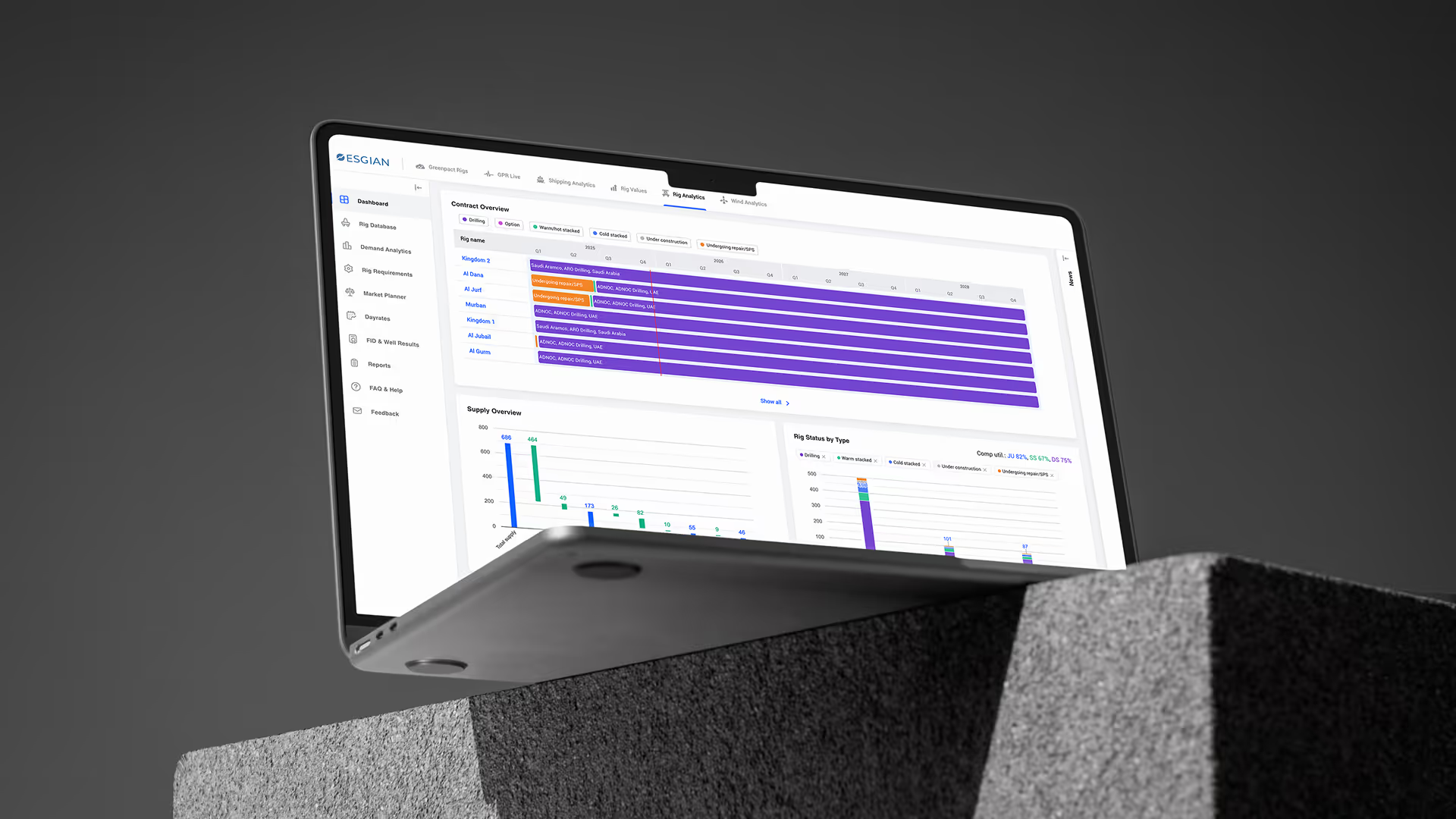
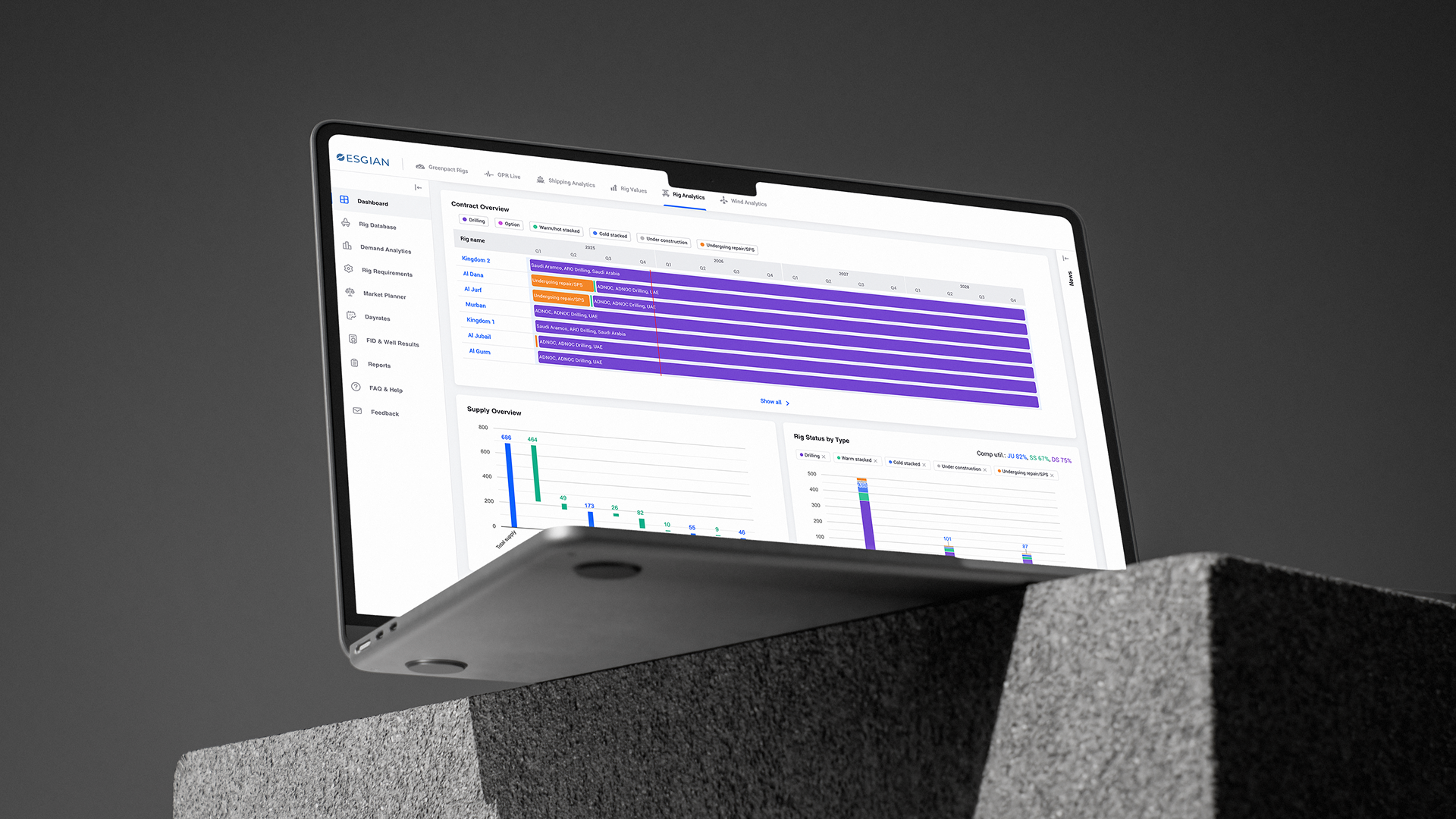
Esgian is creating a new category of ocean intelligence: a suite of platforms that combine commercial, technical and environmental data to provide integrated ESG intelligence for the maritime and offshore energy sectors, including offshore rigs, RoRo/MPP shipping and offshore wind projects.

WDF joined at day zero as Esgian’s product engineering partner and stayed for more than five years, guiding the journey from first concept and architecture decisions through multiple product releases all the way to a successful handover to Esgian’s own in‑house engineering team.

The Business 
Challenge

Esgian’s founders had deep domain expertise and a clear product vision, but no existing platform or engineering team. They needed to:
  • Build a modern, cloud‑native platform from scratch
  • Combine disparate data sources into a consistent, trustworthy view
  • Offer fast, responsive tools for analysis, valuation and emissions modelling
  • Move quickly enough to validate the business model and secure funding
  • Avoid creating a black‑box vendor dependency that would block them later
Esgian was looking not just for an agency to “build an app”, but for a long‑term partner who could:
  1. Design and implement the initial architecture and products
  2. Help them scale a joint team as they hired product managers and analysts
  3. Hand over the platform to an internal engineering organisation without disruption

Our Role

WDF became Esgian’s founding product engineering team. Over time, the collaboration evolved through three stages:
  1. Greenfield build – full‑cycle ownership from discovery to production
  2. Hybrid model – shared delivery with Esgian’s growing product organisation
  3. Transition – structured handover to Esgian’s in‑house technical team
Throughout all stages, WDF remained responsible for:
  • Software architecture and technical direction
  • Full‑stack implementation for web and supporting services
  • Data engineering and integration patterns
  • DevOps, CI/CD and production operations

Esgian’s leadership and domain experts focused on market positioning, product strategy and data sources, while WDF turned these into reliable, scalable software.
Where oceans become

real signals
live data
clear insight

The Delivery Journey

Three clear stages – initial build, hybrid co‑delivery, and knowledge transfer – ensured both speed early on and long‑term independence later.

Phase 1

From concept to live product

In the early years, Esgian had no legacy to work around. WDF used that freedom to design a cloud‑native, service‑oriented architecture on AWS: TypeScript microservices, event‑driven data pipelines, and React frontends built for analytical workflows. The goal was to ship a credible first version quickly – without sacrificing the qualities that matter later: observability, testability, extensibility and security.

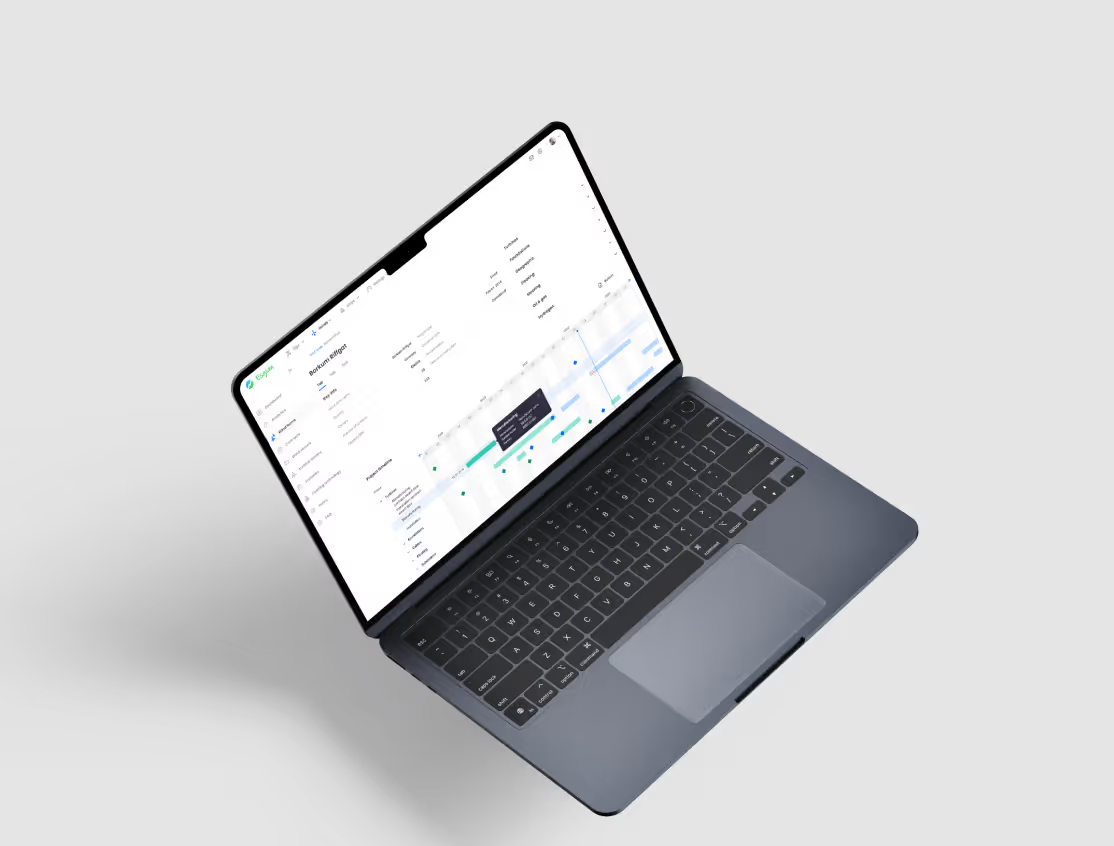
Working side‑by‑side with Esgian’s domain experts, WDF delivered the first versions of Rigs, Shipping and Wind, each with interactive analytical tools, role‑based access control and multi‑tenant isolation. Two‑week sprints with regular demos let Esgian’s leadership see progress, adjust priorities and validate assumptions directly in the running product.

Phase 2

Scaling together with a hybrid team

Once Esgian secured funding, the company hired product managers, analysts and domain specialists. Rather than a handoff, WDF and Esgian opted for a hybrid model built around a single Jira backlog.

Esgian’s product managers created epics and user stories describing business value and domain rules. A WDF project manager and scrum master, together with the development team, translated these into a delivery plan: technical tasks, estimates and two‑week sprint planning. Everyone – WDF engineers, Esgian product owners and stakeholders – worked in the same tools: Jira for planning, Confluence for specifications and runbooks, and shared channels for day‑to‑day collaboration.

This meant product decisions stayed close to domain experts, technical decisions stayed coherent with architecture, and there was no “throwing requirements over the wall.”

As usage grew, WDF extended the platform to handle higher data volumes, more granular emissions metrics and improved query performance – all while maintaining high uptime and predictable release cadence, essential for daily decision‑making.

Phase 3

Transition to Esgian’s own engineering team

When Esgian was ready to build an in‑house engineering group, the priority was continuity. WDF documented architecture, patterns and operational practices in depth; structured codebases and infrastructure for discoverability; and onboarded new Esgian engineers into existing rituals.

Responsibility shifted gradually:
  1. Esgian engineers paired with WDF developers on selected features
  2. Over time, they took over more components and services
  3. WDF moved into a mentorship and advisory role, focusing on complex changes and architecture questions
  4. Eventually, Esgian’s team ran releases, operations and roadmap delivery independently

The result was a smooth transition: no major outages, no long freeze on new features, and no loss of knowledge.

Why It Matters

While specific metrics remain confidential, the impact of the collaboration is clear. Esgian moved from concept to live product in months rather than years, securing investment and market traction on the strength of a mature, production‑ready platform.

Rigs, Shipping, and Wind evolved into differentiated products in a competitive, risk‑averse market. Today, Esgian operates with an independent internal engineering team, built on top of a clean, well‑documented architecture that continues to scale.

Technologies

Python

Used for complex data ingestion pipelines, emissions modeling algorithms, and valuation logic.

React

Building the data-rich dashboards and visualization tools used by analysts and decision-makers.

AWS

The secure, scalable foundation hosting the entire platform, from compute to managed databases.

PostgreSQL

Reliable primary storage for user data, fleets, and core application state.

TypeScript

Powering the core microservices architecture and API layer for high-performance data delivery.

Talk to
our team

Share how we can reach you, and we’ll arrange a brief call with both a product and engineering expert from WDF to walk through your situation and answer questions.

By clicking “Send message”, you allow WDF to store and process your personal data to handle your request in accordance with our Privacy Policy. You can withdraw your consent at any time.

Thank you! Your submission has been received!
Oops! Something went wrong while submitting the form.

Prefer to reach out directly?

Vojta Strnad
Vojta Strnad
Director at WDF