Website development for a European fertility clinic network

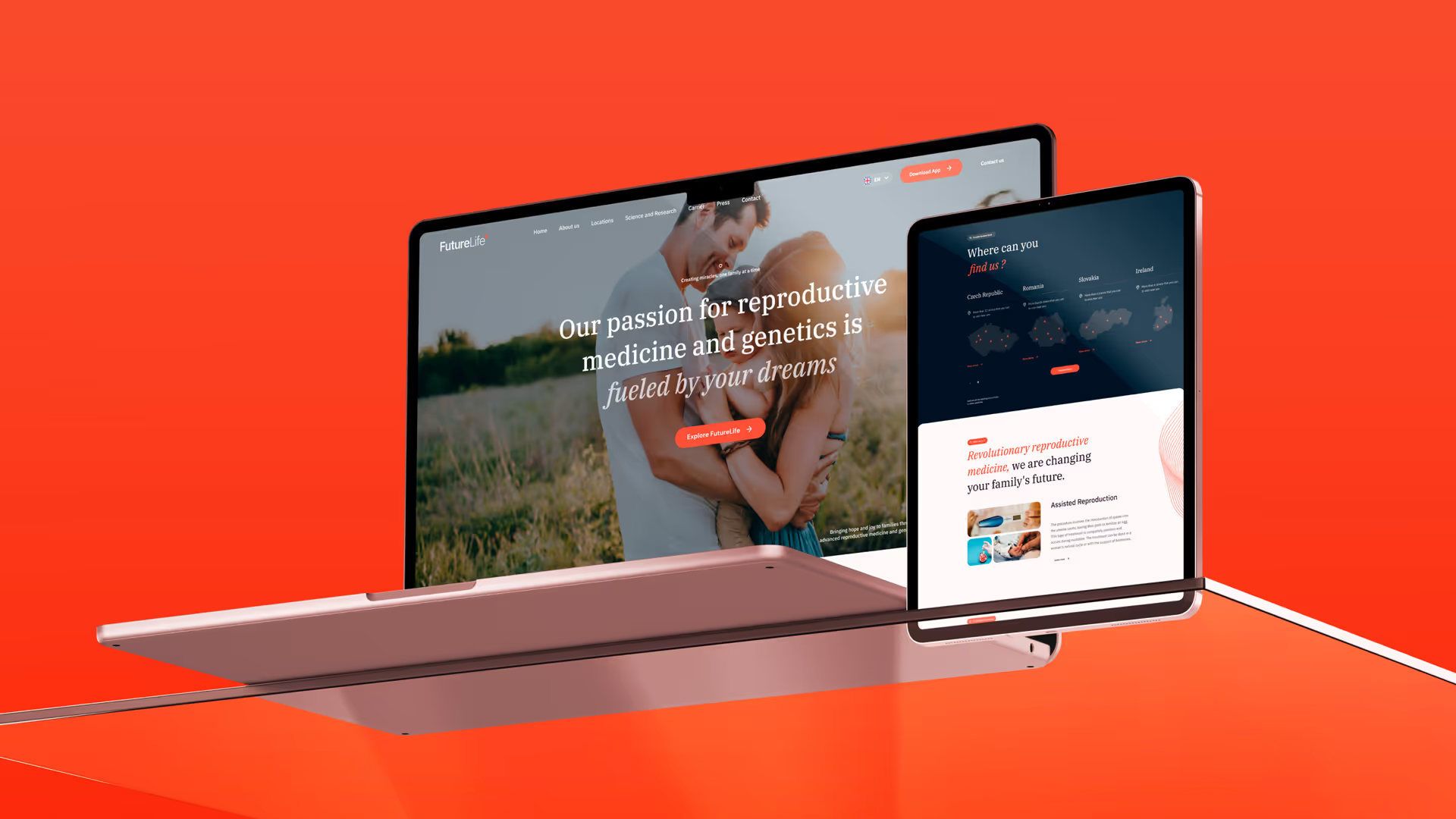
Engineering unique, brand-aligned websites for FutureLife's clinics using a scalable design system that ensures technical consistency, regulatory compliance, and SEO performance across markets.

Client
FutureLife
Services
Website development, Design system architecture, UX/UI design, Django CMS development, Security & compliance infrastructure, DevOps & CI/CD pipelines
Industries
Healthcare, Reproductive medicine, Medical technology

Overview

FutureLife operates a network of reproductive health clinics across Europe – each needing a distinct digital presence that balances brand consistency with local market requirements.

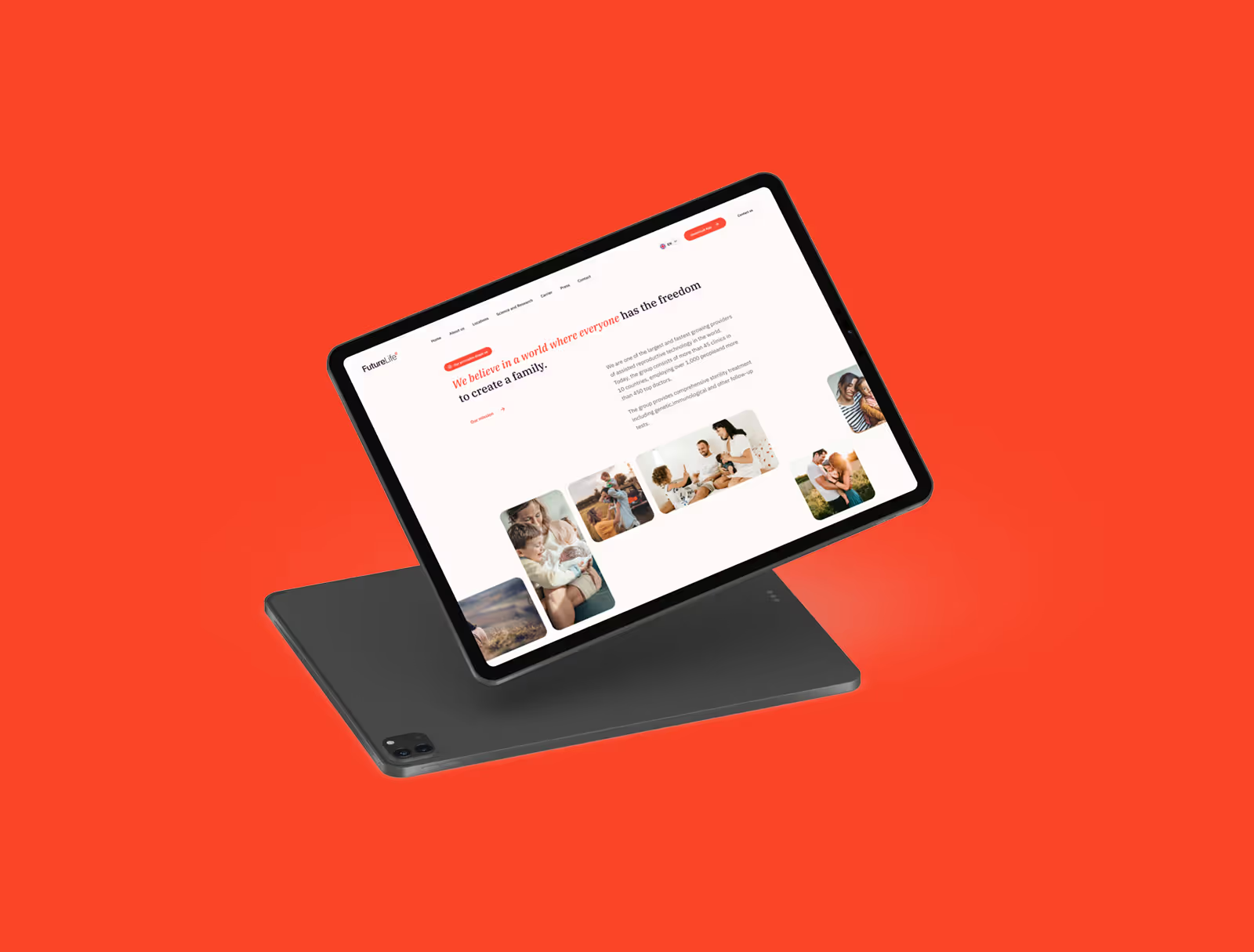
WDF engineered a modular design system integrated with Django CMS. Each clinic receives a unique design implementation while maintaining technical consistency, regulatory compliance, and SEO optimization across the network.

Since deployment, WDF has delivered production instances for nine clinics including Sanus, Fertility Madrid, Ovumia, NIJ Clinics, Reprofit, Gynera, FIV Valencia, and Institut Marquès.

The Business 
Challenge

Turn a fragmented website ecosystem into a scalable platform without losing market flexibility.

FutureLife's clinics span multiple countries with different languages and regulatory requirements. The existing approach – building bespoke implementations for each clinic – broke down at scale. Every feature request cascaded into dozens of separate implementations.

The solution required preserving brand flexibility while introducing architectural leverage through a unified design system.

Our Role

WDF engineered the complete system – design system architecture, unique clinic designs, Django CMS implementation, and deployment infrastructure.

WDF developed a design system integrated with Django CMS, featuring four foundational patterns representing distinct positioning strategies. For each clinic, WDF's design team creates a unique visual implementation with custom design tokens (typography scales, color systems, spacing variables), compiled into CSS and integrated as Python packages for distribution.

Shared functionality is abstracted into standalone packages with semantic versioning. Updates and fixes deploy network-wide through standard dependency management. Clinic-specific implementations remain isolated, enabling system updates while preserving unique brand identities.

The architecture includes SEO optimization with structured data markup, privacy controls for consent management and data access rights, and a component library enabling content teams to build pages without developer intervention.
The Delivery Journey

WDF approached the project as a platform build: establish technical foundations, validate with production deployments, then scale based on operational learnings.

Phase 1

Architecture & design system foundations

WDF collaborated with FutureLife to define four foundational patterns representing distinct clinic personas: international destination clinics, premium regional providers, accessible urban centers, and community-focused local practices. Each pattern addresses different market positioning and patient journey requirements.

The team established the Django CMS architecture, Python package structure, design token compilation pipeline, and deployment infrastructure. Multi-environment workflows were implemented from the start, enabling safe integration testing without affecting production instances.

Phase 2

Pattern validation & design implementation

With the architecture established, WDF began creating unique designs for individual clinics. Each design process starts with brand guidelines analysis, followed by custom design token definition (typography, color systems, spacing), component library creation, and Django CMS integration.

Production deployments validated the architecture's flexibility – confirming that the system could support diverse visual identities while maintaining technical consistency. WDF refined the design-to-deployment workflow, hardened the CI/CD pipeline, and optimized the CMS editing experience based on content team feedback.

Phase 3

Production operations & continuous evolution

With multiple clinics live, WDF transitioned into ongoing partnership mode. The team maintains the platform, designs new clinic websites, introduces components as requirements emerge, and supports FutureLife with technical guidance.

The architecture has proven adaptable as FutureLife expands into new markets. Recent work includes multi-market campaign sites (UK/Ireland fertility awareness initiative), enhanced localization capabilities, and privacy controls responding to evolving regulatory requirements.

Why It Matters

The FutureLife design system demonstrates how healthcare organizations can scale digital operations without compromising quality or market responsiveness.

When FutureLife acquires or partners with a clinic, that clinic gains immediate access to production-tested infrastructure, regulatory compliance mechanisms, and SEO-optimized architecture – rather than starting from scratch. Marketing teams focus on positioning and content strategy instead of coordinating technical vendors. Patients experience consistent quality regardless of which clinic they engage with.

The system proves that architectural standardization doesn't require visual uniformity. Each clinic maintains its distinct brand identity, but all benefit from shared infrastructure improvements, security updates, and feature additions developed for the network.

Now FutureLife has:
  • Scalable launch capability
    New clinics receive custom-designed websites built on proven architecture, reducing time-to-market while maintaining quality standards.
  • Network-wide technical leverage
    Performance improvements, security updates, and new capabilities deploy across all instances through centralized package management.
  • Preserved brand autonomy
    Each clinic customizes its digital presence to match local market expectations and brand guidelines without forking from the core platform.
  • Long-term technical partnership
    WDF continues evolving the system as FutureLife grows, new markets emerge, and patient expectations for digital healthcare experiences advance.

Technologies

Python

Used for complex data ingestion pipelines, emissions modeling algorithms, and valuation logic.

React

Building the data-rich dashboards and visualization tools used by analysts and decision-makers.

AWS

The secure, scalable foundation hosting the entire platform, from compute to managed databases.

PostgreSQL

Reliable primary storage for user data, fleets, and core application state.

TypeScript

Powering the core microservices architecture and API layer for high-performance data delivery.

Talk to
our team

Share how we can reach you, and we’ll arrange a brief call with both a product and engineering expert from WDF to walk through your situation and answer questions.

By clicking “Send message”, you allow WDF to store and process your personal data to handle your request in accordance with our Privacy Policy. You can withdraw your consent at any time.

Thank you! Your submission has been received!
Oops! Something went wrong while submitting the form.

Prefer to reach out directly?

Vojta Strnad
Vojta Strnad
Director at WDF